Improving the outside of your home can do much more than enhance curb appeal. A thoughtfully planned outdoor space can provide comfortable areas for entertaining, give children and pets more room to enjoy the property, increase privacy, simplify maintenance, and make everyday activities more enjoyable. The most successful transformations typically begin with a clear understanding of how the property needs to function.
Before starting individual projects, look at your outdoor space as a whole. Consider which areas you use regularly, which spaces are underused, and which features create ongoing problems. Poor drainage, awkward slopes, limited privacy, overgrown vegetation, and disconnected gathering areas can all affect how much you enjoy your yard.
It is also helpful to establish priorities before making changes. Safety and structural concerns should generally come before cosmetic improvements, while projects that involve significant construction should usually be completed before delicate finishing work.
Whether you are planning a complete property transformation or making improvements gradually, the following upgrades can help you create an exterior that is attractive, practical, and easier to enjoy for years to come.
Start With a Clear Plan for Your Entire Property
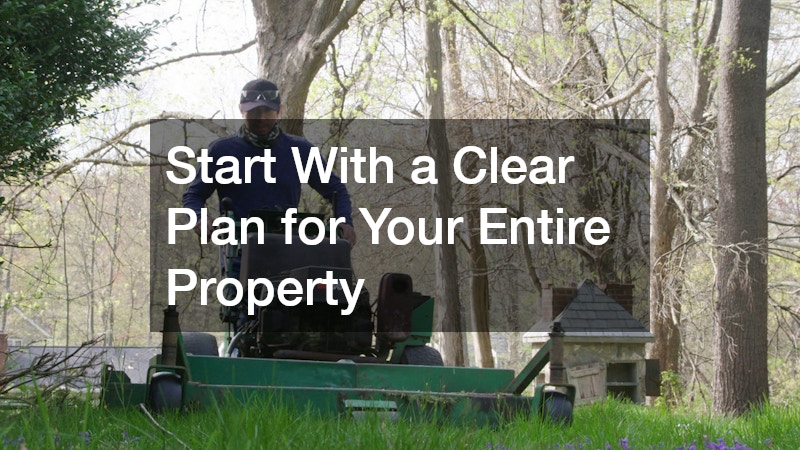
One of the most common mistakes homeowners make is approaching outdoor improvements as unrelated projects. A patio may be installed one year, plants added the next, and a new pathway built later without considering how those features should work together. The result can be an outdoor space that feels disconnected or requires completed work to be changed.
Begin by creating a list of what currently works and what does not. Think about where people naturally walk, where water collects after storms, which areas receive sun or shade, and where additional privacy would be useful. Consider practical needs such as outdoor dining, children’s play areas, pet spaces, gardening, storage, and entertaining.
Professional landscape design can help turn these observations into a coordinated property plan. Instead of focusing only on plants, a comprehensive plan can account for circulation, gathering spaces, drainage, views, lighting, boundaries, and long-term maintenance.
A backyard designer can also help translate general ideas into specific zones and features. For example, a homeowner who simply wants “more entertaining space” may benefit from a layout that connects an outdoor dining area to the kitchen while preserving open lawn elsewhere.
Even if you cannot complete every improvement immediately, having an overall plan provides direction. You can divide the project into manageable phases while making sure today’s decisions will complement tomorrow’s improvements.
Refresh Planting Areas for Better Color and Curb Appeal
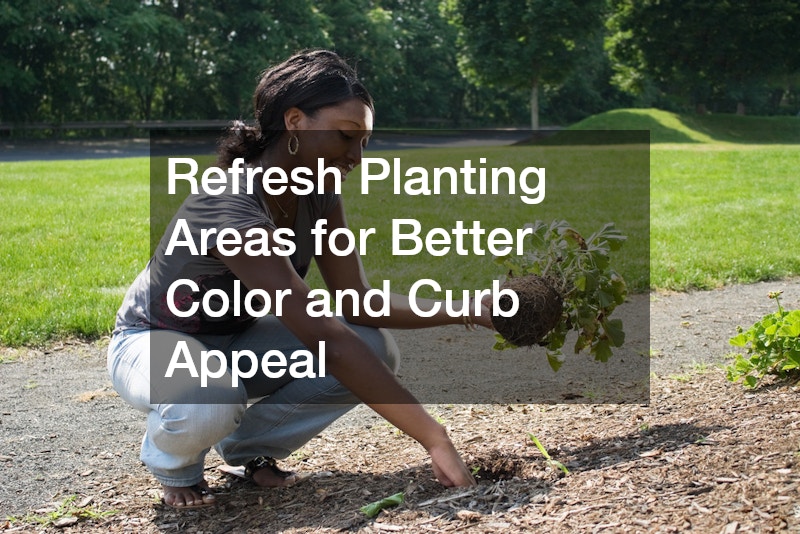
Planting areas have a major influence on how finished and welcoming a property appears. Overgrown shrubs can hide attractive architectural details, while sparse beds may leave large areas looking unfinished. Plants that were appropriate when they were small can also become crowded as they mature.
Start by evaluating existing beds throughout the property. Identify healthy plants worth preserving and look for specimens that are declining, overcrowded, or poorly positioned. Consider how much sunlight each area receives throughout the day, how quickly the soil drains, and how much space mature plants will require.
Strategic flower bed redesigns can improve both appearance and maintenance. Instead of simply replacing individual plants, reconsider the shape and depth of the entire bed. Curves, defined edges, appropriate spacing, and intentional groupings can make planting areas look more cohesive. Layering plants by height can also prevent smaller varieties from becoming hidden behind larger ones.
A local garden nursery can be useful when selecting new plants because staff may be familiar with varieties that perform well under regional conditions. Ask about mature size, sunlight requirements, watering needs, bloom periods, and seasonal appearance rather than choosing plants solely because they look attractive at the time of purchase.
For longer-lasting visual interest, combine plants with different textures and flowering periods. Include varieties that provide structure when flowers are not blooming. Mulch and clearly defined edges can provide the finishing touches while helping suppress weeds and retain soil moisture.
Use Hardscape Features to Manage Slopes and Define Spaces
Sloped properties can create several challenges. Steep areas may be difficult to mow, rainfall can wash soil downhill, and uneven terrain can limit where homeowners can comfortably place seating or recreational features. Addressing these conditions can make the property significantly more usable.
A retaining wall may help manage elevation changes while creating flatter areas for planting or other uses. However, these structures should be planned carefully. Soil pressure and water movement can place considerable force behind a wall, which means drainage and construction methods are important to long-term performance.
Before building, determine where runoff currently travels and how the project could affect that movement. Water should not simply be redirected toward the house or a neighboring property. Taller structures may also be subject to local permits, engineering requirements, or setback rules, so homeowners should research applicable regulations before construction begins.
Hardscape can also be used to organize flatter properties. Low walls, walkways, edging, patios, and steps can establish visual boundaries between different outdoor zones. These features make it easier to understand where people should walk, gather, garden, or play.
Material selection matters as well. Rather than choosing each hardscape feature independently, consider the colors and textures already present on the home’s exterior. Repeating or complementing those materials can make newer improvements feel like intentional parts of the property instead of later additions.
Keep Mature Trees Healthy, Safe, and Visually Balanced
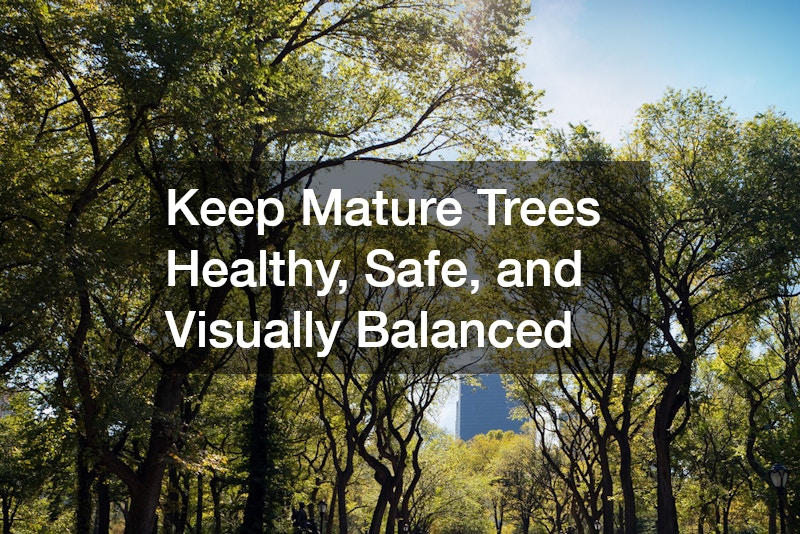
Mature trees can be some of the most valuable features in a yard. They provide shade, create privacy, add vertical interest, and can make a newer property feel more established. Because replacing a mature specimen can take decades, maintaining healthy trees is often worth prioritizing.
Homeowners should periodically look for noticeable changes. Dead branches, cracks, unusual leaning, cavities, fungal growth, damaged bark, or branches rubbing against structures can warrant closer attention. Changes following strong winds or storms should also be inspected.
Proper tree trimming can improve clearance around roofs, walkways, driveways, and other areas while removing appropriate damaged or problematic branches. However, excessive pruning can weaken a tree rather than improve it. Removing too much canopy at once may stress the tree, and improper cuts can create unnecessary damage.
A professional tree service may be appropriate when large limbs, significant heights, power lines, structural concerns, or possible disease are involved. Tree work can become dangerous quickly, especially when heavy branches could fall unpredictably.
Avoid assuming every unusual-looking tree needs to be removed. A qualified evaluation can help determine whether pruning, monitoring, treatment, or removal is the appropriate response.
It is also helpful to consider trees as part of the property’s overall layout. Healthy branches can provide strategic shade over gathering areas, while thoughtful pruning can preserve desirable views and keep important pathways clear without sacrificing the natural character mature trees provide.
Improve Privacy and Security With Better Property Boundaries
Clear property boundaries can make an outdoor space feel more private, secure, and organized. Before selecting a barrier, determine what you actually want it to accomplish. A homeowner trying to keep a dog safely contained may have different priorities from someone who wants privacy around a patio or an attractive border along the front yard.
Materials vary considerably in appearance, maintenance requirements, durability, and cost. Wood can offer a traditional appearance and substantial privacy but may require periodic maintenance. Vinyl can provide privacy with different upkeep requirements, while metal options may be preferred where visibility and an open appearance are important.
Before fence installation begins, confirm the property lines rather than relying on assumptions based on existing vegetation or neighboring structures. Homeowners should also investigate local height restrictions, setback requirements, permit rules, and neighborhood association guidelines where applicable. Underground utilities should be properly located before digging.
When comparing fence companies, look beyond the total estimate. Ask what materials are included, how gates and posts will be constructed, whether removal of an existing barrier is part of the scope, and what warranties apply. Clear estimates make it easier to compare providers accurately.
The style should also coordinate with the house and surrounding improvements. A barrier that complements the property’s architecture and outdoor materials can provide practical benefits without looking purely utilitarian.
Make Your Yard Easier to Use and Maintain Year-Round
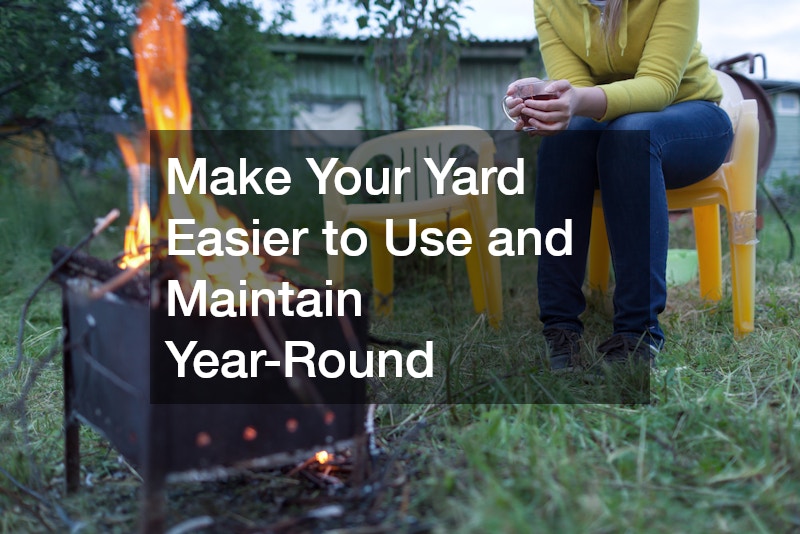
An attractive yard can become frustrating if maintaining it requires more time than you realistically have available. Maintenance should therefore be considered during the planning stage rather than after improvements are complete.
Thoughtful landscaping can simplify routine care by reducing awkward mowing areas, organizing plants into defined beds, and creating logical transitions between spaces. For example, a narrow strip of grass that is difficult to reach with a mower might work better as a planted area, ground cover zone, or walkway.
Plant selection has a significant effect on workload. Choose varieties suited to the available sunlight, soil, and moisture conditions. Plants constantly struggling in the wrong location may require more watering, pruning, replacement, or treatment. Appropriate spacing is equally important because crowded plants can quickly create maintenance challenges as they mature.
Defined edging can keep lawn from spreading into planting areas, while mulch can help control weeds and retain moisture. Walkways can reduce worn paths through lawns and beds while giving family members and visitors a clear route through the property.
Consider irrigation requirements before adding large numbers of new plants. Grouping specimens with similar water needs can simplify care and avoid situations where one variety receives too much water while another receives too little.
Most importantly, design around your actual routine. A practical outdoor space should support how your household lives rather than creating an additional list of chores.
Coordinate Outdoor Projects in the Right Order
When several improvements are planned, the order in which they are completed can make a major difference. Installing delicate plants before bringing heavy equipment through the yard, for example, could result in damaged beds and unnecessary replacement costs.
Begin with issues involving safety, drainage, grading, or major structural work. These projects can affect the shape and condition of large portions of the site and may require excavation or machinery.
Next, complete permanent structural and boundary features. After heavy construction is finished, pathways, gathering areas, irrigation components, and other infrastructure can be addressed. Soil preparation and planting should generally occur closer to the end of the process, followed by mulch and other finishing details.
A typical sequence might include correcting drainage first, completing necessary grading second, building structural features third, installing boundaries and pathways next, and finishing with soil preparation and planting. The ideal order will depend on the specific property and scope of work.
If your budget requires completing improvements over several years, create phases that leave completed areas functional between stages. Avoid temporary solutions that will have to be demolished during the next phase.
Planning the sequence in advance also helps contractors understand how their work relates to future improvements. Even when different professionals handle different portions of the project, sharing the overall plan can reduce conflicts and prevent completed work from becoming an obstacle later.
Build an Outdoor Space You’ll Enjoy for Years
Transforming a property’s exterior does not require completing every possible upgrade. The goal should be creating an environment that supports your household’s needs while remaining attractive, durable, and manageable.
Begin with the issues that have the greatest impact on safety and functionality. Address drainage, unstable areas, deteriorating features, and other underlying concerns before investing heavily in cosmetic improvements. From there, consider how gathering areas, plants, pathways, boundaries, shade, and open spaces can work together.
Maintenance should remain part of every decision. An elaborate outdoor environment may look impressive initially, but it will be difficult to enjoy if its upkeep exceeds your available time or budget. Selecting appropriate materials and plants can make the finished property easier to care for over the long term.
Most importantly, plan improvements as parts of one connected environment. Even when projects are completed over several seasons, a coordinated vision can help prevent conflicting decisions and unnecessary expenses.
With careful planning, realistic budgeting, and attention to how your household actually uses the property, outdoor upgrades can create lasting improvements that make your home more comfortable, functional, and enjoyable throughout the year.