Eco-conscious homeowners are increasingly looking for ways to harmonize their property with the local ecosystem. While manicured lawns have been the standard for decades, they often act as “green concrete,” allowing rainwater to sheet off the surface, picking up pollutants and overwhelming local storm drains. The solution to this modern drainage dilemma is the rain garden—a beautiful, functional landscape feature designed to capture, filter, and absorb runoff.
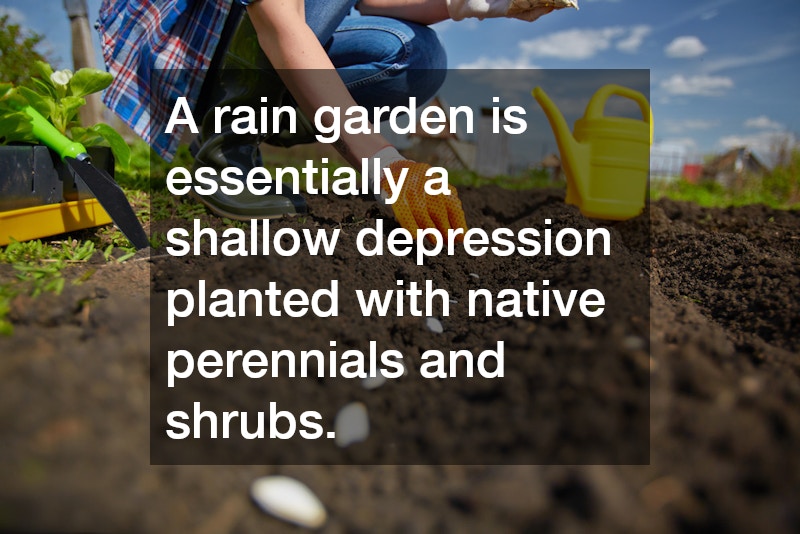
A rain garden is essentially a shallow depression planted with native perennials and shrubs. It isn’t a pond or a wetland; in fact, a well-designed garden should be dry within 24 to 48 hours after a storm.
By slowing down the flow of water, you allow the earth to do what it does best: filter out sediment and chemicals while recharging the local groundwater table.
Site Selection and the Science of Runoff
Before you pick up a shovel, you must understand the hydrology of your yard. A rain garden needs to be strategically placed to intercept water from “impervious surfaces,” such as your roof, driveway, or patio. However, placement is a delicate balance. You should never install a rain garden within ten feet of your home’s foundation, as the goal is to move water away from your basement, not pool it against the walls.
The ideal location is a natural low point in the yard that still receives a decent amount of sunlight. To test if your soil is up to the task, perform a simple percolation test. Dig a hole about 12 inches deep, fill it with water, and see how long it takes to drain. If the water is still there 24 hours later, your soil has high clay content and will require significant amendment to prevent the garden from becoming a stagnant mosquito haven.
You also need to calculate the drainage area. If you are capturing water from a 1,000-square-foot roof, your rain garden should be approximately 100 to 200 square feet, depending on the soil type. This ensures the garden is sized appropriately to handle a standard heavy downpour without overflowing into your neighbor’s yard.
Groundwork and the Role of Professional Excavation Services
Once the perimeter is marked out with string or landscape paint, the physical labor begins. This is the most labor-intensive phase of the project because a rain garden is not just a hole; it is a precision-engineered basin. For smaller gardens, a motivated homeowner might manage with a spade and a wheelbarrow, but for larger residential projects or those dealing with compacted, rocky soil, the DIY approach can quickly become overwhelming.
This is where many homeowners choose to bring in professional excavation services to handle the heavy lifting. A professional team can use specialized equipment to carve out the basin to a consistent depth—usually between six and eight inches—while ensuring the bottom remains perfectly level. A level base is crucial; if the garden is sloped, water will pool at one end, leading to uneven plant growth and potential erosion.
Furthermore, professionals can assist with the “cut and fill” process, using the soil removed from the center of the garden to create a sturdy berm on the downslope side. This berm acts as a dam, holding the water long enough for it to soak into the ground. If your soil failed the percolation test, the excavation phase is also the time to remove poor-quality earth and replace it with a custom bioretention mix—typically a blend of 50% sandy soil, 30% compost, and 20% topsoil.
Plant Selection and Long-Term Ecosystem Health
With the basin prepped and the soil amended, the project shifts from engineering to ecology. The success of a rain garden hinges on selecting “native” plants. Native species are adapted to the local climate and, more importantly, have deep, complex root systems that can reach up to ten feet into the ground. These roots create channels in the soil that act like a sponge, pulling water deep into the earth.
When planting, think in zones. The center of the garden, the deepest part, will experience the most significant saturation. Here, you should plant species that love “wet feet,” such as Swamp Milkweed, Blue Flag Iris, or Cardinal Flower. On the slopes of the basin, choose plants that can handle occasional flooding but prefer drier conditions, like Coneflower or Black-eyed Susans. The top of the berm should be reserved for drought-tolerant grasses and shrubs that provide structural integrity to the mound.
Once the plants are in the ground, apply a thick layer of hardwood mulch. Avoid light, floating mulches like pine bark, as they will simply wash away during the first storm. Hardwood mulch stays put, suppresses weeds, and mimics the forest floor by breaking down over time and adding nutrients back into the soil.
In the first year, your primary task is weeding and occasional watering during extreme droughts until the native plants establish their deep roots. Once established, the rain garden becomes a low-maintenance powerhouse. It will attract pollinators like bees and butterflies, provide a pop of seasonal color, and—most importantly—ensure that every drop of rain falling on your property is treated as a resource rather than a waste product. Through careful planning and the right structural help, you can transform a soggy patch of lawn into a thriving, sustainable sanctuary.
Eco-conscious homeowners are increasingly looking for ways to harmonize their property with the local ecosystem. While manicured lawns have been the standard for decades, they often act as “green concrete,” allowing rainwater to sheet off the surface, picking up pollutants and overwhelming local storm drains. The solution to this modern drainage dilemma is the rain garden—a beautiful, functional landscape feature designed to capture, filter, and absorb runoff.
A rain garden is essentially a shallow depression planted with native perennials and shrubs. It isn’t a pond or a wetland; in fact, a well-designed garden should be dry within 24 to 48 hours after a storm.
By slowing down the flow of water, you allow the earth to do what it does best: filter out sediment and chemicals while recharging the local groundwater table.
Site Selection and the Science of Runoff
Before you pick up a shovel, you must understand the hydrology of your yard. A rain garden needs to be strategically placed to intercept water from “impervious surfaces,” such as your roof, driveway, or patio. However, placement is a delicate balance. You should never install a rain garden within ten feet of your home’s foundation, as the goal is to move water away from your basement, not pool it against the walls.
The ideal location is a natural low point in the yard that still receives a decent amount of sunlight. To test if your soil is up to the task, perform a simple percolation test. Dig a hole about 12 inches deep, fill it with water, and see how long it takes to drain. If the water is still there 24 hours later, your soil has high clay content and will require significant amendment to prevent the garden from becoming a stagnant mosquito haven.
You also need to calculate the drainage area. If you are capturing water from a 1,000-square-foot roof, your rain garden should be approximately 100 to 200 square feet, depending on the soil type. This ensures the garden is sized appropriately to handle a standard heavy downpour without overflowing into your neighbor’s yard.
Groundwork and the Role of Professional Excavation Services
Once the perimeter is marked out with string or landscape paint, the physical labor begins. This is the most labor-intensive phase of the project because a rain garden is not just a hole; it is a precision-engineered basin. For smaller gardens, a motivated homeowner might manage with a spade and a wheelbarrow, but for larger residential projects or those dealing with compacted, rocky soil, the DIY approach can quickly become overwhelming.
This is where many homeowners choose to bring in professional excavation services to handle the heavy lifting. A professional team can use specialized equipment to carve out the basin to a consistent depth—usually between six and eight inches—while ensuring the bottom remains perfectly level. A level base is crucial; if the garden is sloped, water will pool at one end, leading to uneven plant growth and potential erosion.
Furthermore, professionals can assist with the “cut and fill” process, using the soil removed from the center of the garden to create a sturdy berm on the downslope side. This berm acts as a dam, holding the water long enough for it to soak into the ground. If your soil failed the percolation test, the excavation phase is also the time to remove poor-quality earth and replace it with a custom bioretention mix—typically a blend of 50% sandy soil, 30% compost, and 20% topsoil.
Plant Selection and Long-Term Ecosystem Health
With the basin prepped and the soil amended, the project shifts from engineering to ecology. The success of a rain garden hinges on selecting “native” plants. Native species are adapted to the local climate and, more importantly, have deep, complex root systems that can reach up to ten feet into the ground. These roots create channels in the soil that act like a sponge, pulling water deep into the earth.
When planting, think in zones. The center of the garden, the deepest part, will experience the most significant saturation. Here, you should plant species that love “wet feet,” such as Swamp Milkweed, Blue Flag Iris, or Cardinal Flower. On the slopes of the basin, choose plants that can handle occasional flooding but prefer drier conditions, like Coneflower or Black-eyed Susans. The top of the berm should be reserved for drought-tolerant grasses and shrubs that provide structural integrity to the mound.
Once the plants are in the ground, apply a thick layer of hardwood mulch. Avoid light, floating mulches like pine bark, as they will simply wash away during the first storm. Hardwood mulch stays put, suppresses weeds, and mimics the forest floor by breaking down over time and adding nutrients back into the soil.
In the first year, your primary task is weeding and occasional watering during extreme droughts until the native plants establish their deep roots. Once established, the rain garden becomes a low-maintenance powerhouse. It will attract pollinators like bees and butterflies, provide a pop of seasonal color, and—most importantly—ensure that every drop of rain falling on your property is treated as a resource rather than a waste product. Through careful planning and the right structural help, you can transform a soggy patch of lawn into a thriving, sustainable sanctuary.